I appreciated the topic of knowledge curation tools in class. To me, this is something that has been overlooked as an important aspect of teaching and taking this program. If we aren’t organizing what we’re learning in a way that is easy to access, so much of it will be lost and we’ll be forced to learn it all over again (or not bother).
I also think that we as teachers need to explore and share the wonderful resources that already exist online for free. There are so many organizations that work with experts to develop fantastic units and lesson plans that are available for free. For instance, I think the material at “Facing History and Ourselves”, “Zinn Education Project”, “CIVIX CTRL-F,” “The Critical Thinking Consortium,” “Composer Education,” “Teaching Tolerance,” and “Common Sense Media,” are all incredibly helpful for a social studies classroom. Often they include built out activities with profiles and details that teachers would not normally have the time (and often the expertise) to create. I like the creative aspect of creating units so I probably wouldn’t take anything completely without tweaking it to meet the specific needs of my students, but they are a fantastic place to start.
Personally, I use OneNote to organize all the notes and resources I find. I was introduced to the software at my last work place, and it was there that I grew to appreciate how powerful it is. I can have all my notes, information, links, etc. available just a couple of clicks away, in an easy to organize fashion. Rather than having to peruse through layers and layers of folders in order to open up separate documents, everything is at my finger tips. If I’m typing notes for my PSYCH class and she shares a strategy that resonates with me that I would want to do in my future class, I can quickly add it to my “Class Planning” notebook.
Regarding the future of education, I hope it continues to move in the direction it has been moving since I was in high school. I hope that it becomes less rigid and grades become less important. I hope that students are cared for first and foremost as human beings. I hope that they learn to explore what they are interested in, but also are inspired by their teachers and classmates. I hope that technology is leveraged carefully and selectively to enhance the experience, but nature and the outdoors is done so just as often.. And I hope that teachers work together to bridge disciplines and learn and grow from one another. This is the future that is worth working towards.
I can’t believe the semester is already coming to a close! I feel like I have gotten a lot out of my free inquiry project and yet there is so much that I didn’t get to. The researching and understand the local Indigenous communities here has already been really helpful and important in some of the lessons and units I’ve been building.
Some areas I hope to explore more over the break:
Chinatown and Asian history in Victoria
Black history in Victoria
Visiting the Victoria Archives
Taking a Walking Tour of Victoria
Visiting the Royal BC Museum again
This project helped me see just how much I don’t know about this place I call home. I hope to continue being curious and adventurous with exploring and understanding different parts of this Land and its history.
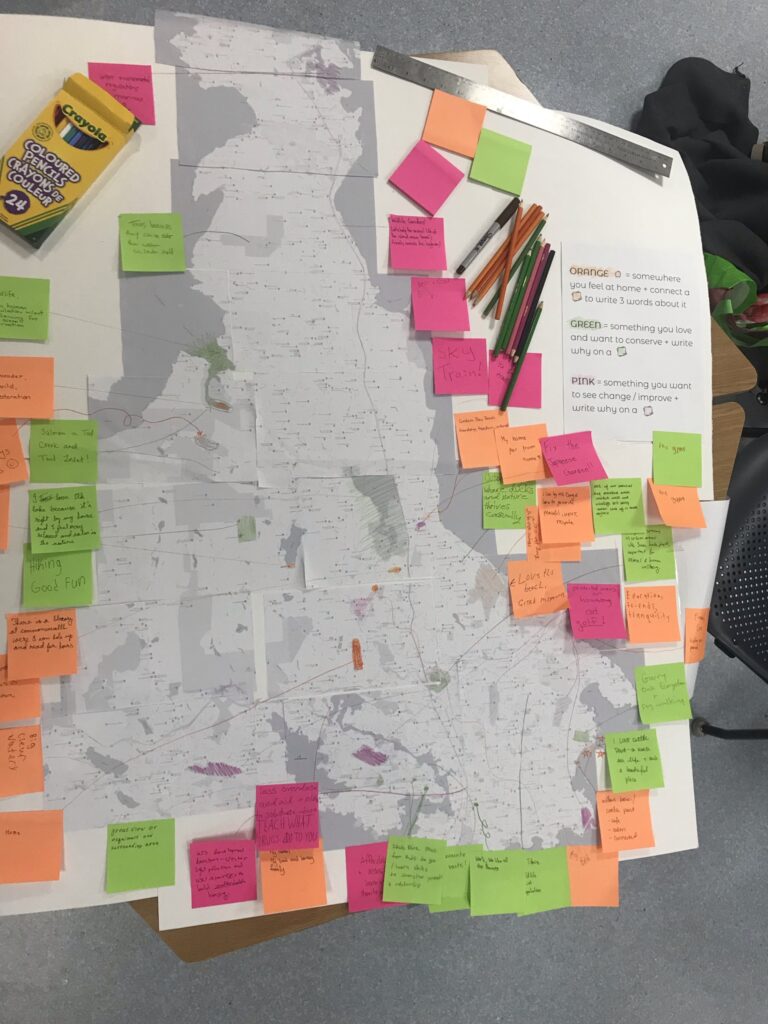
Last week, I was lucky enough to have the opportunity to interact with students at Claremont secondary. For my “booth”, I wanted to utilize some principles of place-based education that I had been researching, and help the students collaborate and contribute.
I ended up creating a giant map of Victoria and Saanich and prompting students to consider:
Where is a place you feel at home?
What is something you love about your community and want to preserve?
What is something you want to improve or transform?
Students then used colours to indicate their choices and wrote a few words on a sticky note explaining their choices. It was really cool to see places that were special to them – some I had never even heard of! Guess I have some more exploring to do over the break.
This week we got to hear from Tracy Humphreys, the Chair and Executive Director at BCEd Access. She talked to us about the organization, and the importance of considering accessibility and inclusivity in the classroom. I appreciated getting to hear from her, as this is something I know will be a critical priority, and also a real challenge. This semester has mostly been focused on creating unit and lesson plans that are exciting but I realize I didn’t often have a wide diversity of students in my mind when making them. Sure, I always try to include different forms of engagement (such as videos, writing, moving, etc.), but what happens when one student is miles ahead and another is struggling with the basics? I realized I have been designing for a monolithic classroom, and have not built in much UDL or differentiation.
This is a good learning for me. I already know that I have a tendency to want to cram in an unrealistic amount of activities into short periods of time, and this approach would be a big disservice to many students. That tendency of mine probably has roots in capitalist, ableist ideas that tries to squeeze every ounce of “productivity” from the moment. Yet it is the opportunity to pause, reflect, ask questions, and struggle with the content that leads to deeper learning, and helps those who may otherwise fall behind catch up. I will try to reframe the issue to myself as one of equity, and hopefully this helps me step back and be okay with “going slow.”
I imagine supporting diverse learners is often pushed to the side for new teachers, who spend so much of their time just gathering and creating lessons and units for their classes. I hope that any opportunity I have to prepare and plan ahead of a semester starting I take it; I want to be able to give my energy and presence to the students, and be receptive to their needs and interests. I can already picture how difficult this would be when I am feeling overworked and anxious about the half-planned lessons that I need to finish. Yet in a world that is already so challenging for people with diverse abilities, I hope to meet all my students where they’re at, and help them to get wherever they want to go.
As a teenager, I went to Oak Bay High, and every day I would walk through Bowker Creek on my way to school. I learned that since living away, there has been a massive effort to restore the creek. There is hope to one day see salmon return to the creek, as they once did. To me this is such a great example of community action and investment to help undo some of the damage that we have done over the past few centuries.
I took a walk around Bowker Creek this week and got to look at the changes. I’ve found that the Royal BC Museum has a learning portal playlist devoted to this topic of salmon at Bowker Creek (access it here).
I think it’s important as educators that we’re aware of stories of success and victories to share with our students. In a world where things can often feel helpless, examples of people coming together for the common good can empower us through hope. I hope to find and share more stories like this in the future.
E-Portfolios (or digital portfolios) are collections of writings, documents, and other artefacts collected over time to demonstrate student learning. While there are different types, we will explore the Learning Portfolio, which facilitates and demonstrates learning over time (rather than the best pieces being evaluated at the end).[i]
Benefits
Making Learning Visible
By collecting, documenting, and reflecting on different pieces of work over a period of time, digital portfolios allow students and instructors to see progress that has been made. The insights that digital portfolios provide help educators give targeted feedback seamlessly and allow parents to follow along with their child’s learning. At the end of the unit / class, students walk away with a tangible representation of their learning.[ii]
Metacognition
Digital portfolios allow opportunity for students to reflect on feedback, past work, and their learnings in a way that encourages growth. Built in opportunities for self, peer, and educator feedback can help students deepen their learning.
Building Independent Learners
Digital portfolios can support the development of self-directed learning and representational learning. Through the gradual release of responsibility, teachers can support students in finding new and creative ways to represent their learnings.[iii]
Digital Tools
E-Portfolios can be kept on a number of different platforms; some offer the benefit of simplicity, while others allow for greater creative freedoms and options. Here are some ideas:
Google Slides: students document their learning through notes / images on Google Slides. The teacher may create a template that provides a clear structure, but the Slides are somewhat limiting. Great video example here.
Microsoft OneNote: Students could have their own section or section group in which they can add a multitude of media types. This has the advantage of everything being easily accessible in a single Notebook. Guide here.
WordPress: Students can create a website through which they can blog and add media, like we’re doing in our class. Some students may find the platform challenging without a lot of guidance. Guidance here.
NOTE: Students can complete a lot of their portfolio without computers in class through writing, drawing, etc. They just need to take photos of their work and upload them once they have access to a computer.
Self-Assessment: The portfolio format allows students to self-assess how well they’ve demonstrated their learning.
Peer-Assessment: Through comments or separate submissions, peers can provide feedback and direction. Both self and peer-assessment should be supported by clear criteria and expectations around how to give it. If using a site like WordPress, you may ask students to read and respond to the works of others, using hyperlinks. You may have students work in “peer blog mentor” groups to help facilitate this. Teachers should still review all feedback.
Teacher Assessment: Ongoing meaningful feedback is critical for students. Teachers may choose not to give grades throughout, and instead provide written / oral feedback that students can incorporate in their future posts.
Develop and communicate a clear purpose, focus, and structure
Determine where will there be choice for how students reflect their learning, and where will you give them clear structure
Structure should be clear, but not overly rigid
Don’t overwhelm them with all the information at the beginning for a long portfolio.
Choose a platform and create a template for each student to use
Facilitate students developing and creating media / learning artefacts
Start a lesson by telling students what their portfolio output look like at the end of a lesson / unit. This will help them begin with the end in mind, and engage with the material intentionally.
Support skill development and time management
Remind students regularly to put work in their portfolio
Avoid a “digital dump”’ – make sure that everything they upload adds something.
Build in time for reflection, self assessment and peer assessment. Check out some strategies / questions for facilitating metacognition here.
Support students in keeping the contents of their portfolio at the end.
Possible Products in an E-Portfolio
Artwork
Audio recordings / podcasts
Book reports / reviews
Charts and graphs
Essays (drafts and final copies)
Self and peer evaluations
Interview results
Blog / journal entries
Maps
Classroom notes
Photographs of experiments / monuments / etc.
Videos of presentations, debates, interviews, or simulations
Mind Maps
Embedded social media posts from figures
Posters / Digital Posters
Activity sheets and other assignments
Examples
Create a digital museum exhibit with some of the most important items from history. Each entry should center on a different object related to what we learned in class and be supported by evidence.
Your digital portfolio is based around the question: how do we see the past in the present? As we explore themes in our class, you will reflect on ways that it relates to your life today using tools of inquiry.
Your digital portfolio for English will be where you house your responses to the different texts we explore. You will be prompted with specific questions relating to the texts that build on one another week to week.
Your digital portfolio for HPE will track your research and learning around what makes a healthy lifestyle. This will inform your personal health plan, which will be the summative assessment.
Your digital portfolio will be where we track your learning throughout the semester. You’ll answer the question “Why is science important?” at the beginning, and regularly return to ways that your thoughts have been broadened and deepened.
Group Work
The best way top facilitate group work with portfolios is creating small groups that are accountable to reviewing and providing feedback to one another. Additionally, products that are created together could be shared across different platforms or linked between them.
Drawbacks / Risks
Access to technology. Many students may struggle if they don’t have reliable access to computers or the internet. This could be mitigated if they have a phone (can upload at school through photographs), but still adds an additional burden on that student. It is recommended you survey your students’ situations and provide fair accommodations before beginning.
A lot to keep track of. It’s critical to provide regular and ongoing feedback because if you’re not on top of it, you could fall behind. Having a clear roadmap with milestones and opportunities for metacognition and different types of assessments will help ensure it stays under control.
An Illustrative Example
Ms. Brown’s wants to use an ePortfolio in her social studies classroom across the entire semester. She surveys the students to get a sense of their access to technology and provides alternatives ways of participating and looser deadlines for students with more limited access. She decides she wants to use WordPress and so sets aside class time in the computer lab to walk students through signing up for the platform and getting familiar with it. She plans to use the portfolio as a way to track student thinking and learning, as well as facilitate collaboration and feedback. Ms Brown explains the benefits and purpose behind the portfolio for the students, outlines the criteria they will be evaluated on (which includes creativity), and explains that she will be explicit about when they need to add something to the portfolio. She chose this strategy rather than “upload whenever you want” because she thought her students would benefit from the direction, it would make assessment more straightforward, and would ensure higher quality work rather than risking a “digital dump.”
She also outlines the different options for students, explaining they can use a pseudonym and works with the class to develop rules that everyone is comfortable with (ie. Don’t use last names, etc.). She has students submit their websites to her in a form, and emails the parents of the students to let them know that they are encouraged to follow along.
Ms. Brown splits the class into groups that will support one another’s portfolios. Ms Brown is the only person to initially provide feedback, but instead of giving a mark, she gives concrete praise and suggestions for improvement, which her students can choose to immediately implement for a small boost of their grade. After a few weeks, she supports students in understanding how to self-assess, which she then begins requiring before she assesses, to help support student metacognition. A few weeks later, she teaches students how to give effective peer feedback, and occasionally requires this through the use of private comments, which she oversees and corrects when necessary.
Ms. Brown frames each unit around 1 or more critical inquiry questions, that allow the students to demonstrate their evolving understanding through their portfolio. One unit for instance, is framed around the question “Which social movement most drastically reshaped our world?” The students submit assignments like a digital infographic on the impacts of the Pride Movement, an interactive map to capturing dimensions of the Idle No More movement, a photo essay of evidence of the current day feminist movement around their neighbourhood, and a podcast interview of someone who lived through a major social movement. Additional submissions range from larger items (such as a group project timeline) to smaller pieces (such as a paragraph detailing the student’s top takeaways from a single class discussion.) Ms. Brown also requires periodic reflection posts that encourage students to make connections between topics and recognize their learning strategies and skills that have been successful thus far. For each major content submission, Ms. Brown tries to give a few options of the multimedia type of submission that can be used but explains that diverse modes of communication are part of the criteria for assessment. Rather than expect students to know how to utilize these different types of multimedia effectively, Ms. Brown provides step-by-step guides and encourages peer mentorship within the groups.
Part way through the semester she has students fill out a survey to get a sense of how they are finding the portfolio, and if she can make any changes to make things simpler for them. At the end of the semester, Miss Brown asks the students to choose 1-5 portfolio submissions that represent their biggest learnings from the class and supports them in writing a short paper explaining and backing up their choices.
For this week’s inquiry I wanted to learn more about what sort of food is grown locally in Victoria, and where I can buy it. It’s a goal of mine to buy more locally produced food to help support local farmers and cut down on carbon emissions from transporting food.
I found a great Victoria-specific website that I wanted to share with everyone. I tried screencastify for the first time and made a video of me walking through it – hope you enjoy!
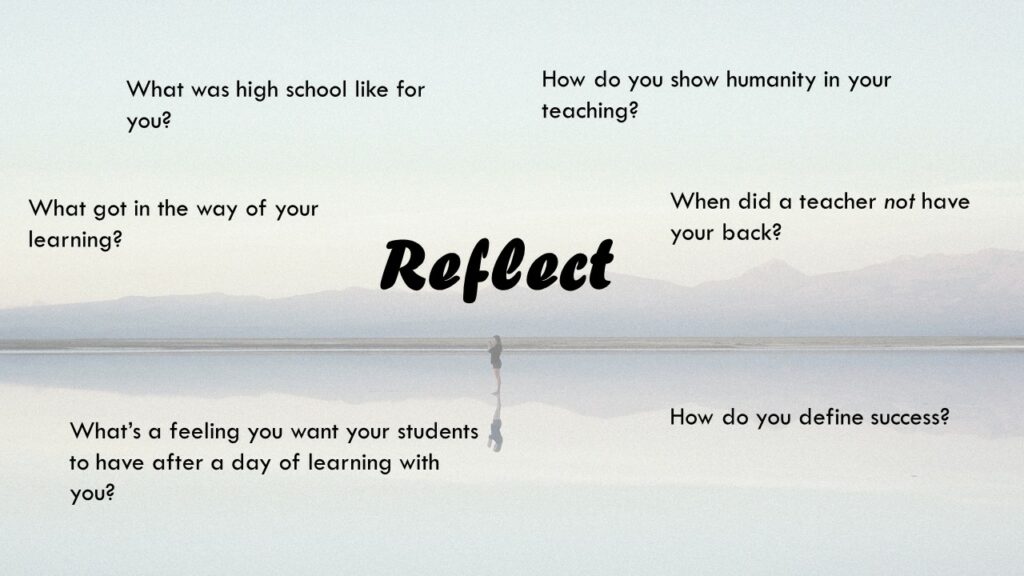
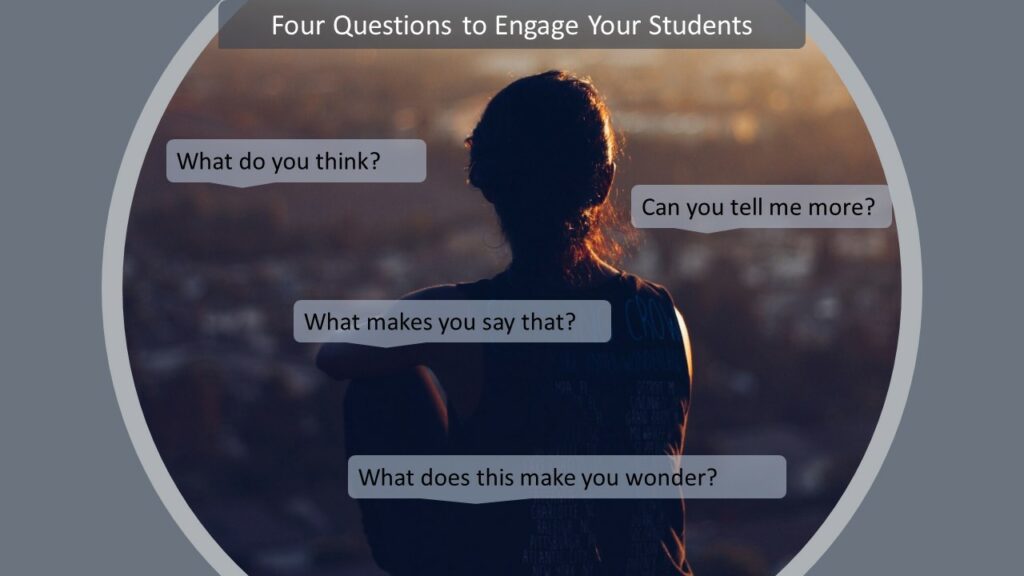
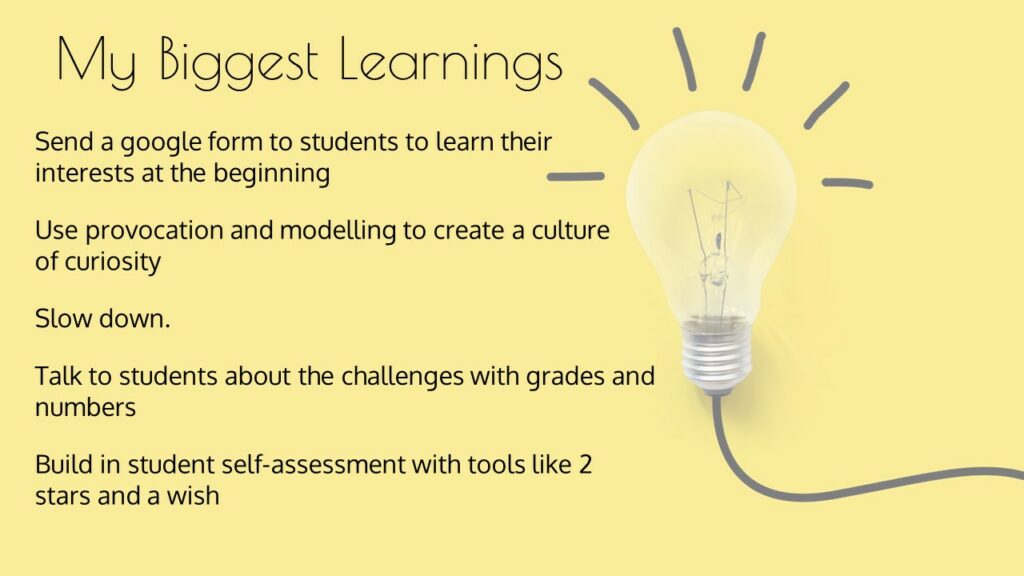
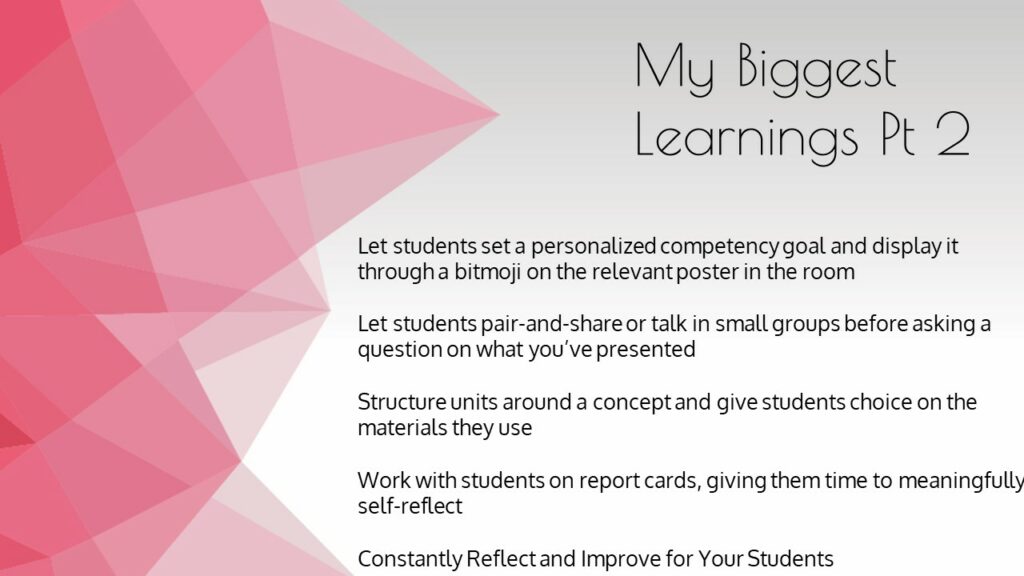
In class on Friday we were lucky enough to get to hear from Trevor Mackenzie. I got a lot out of his presentation, and decided to capture some of the key ideas through images I created on PPT. I played around with some of the format options and pulled pictures from Unsplash and the Powerpoint Stock Images.
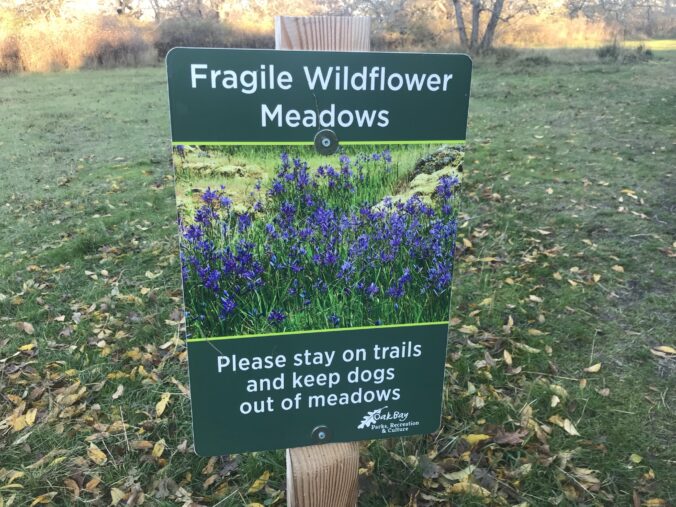
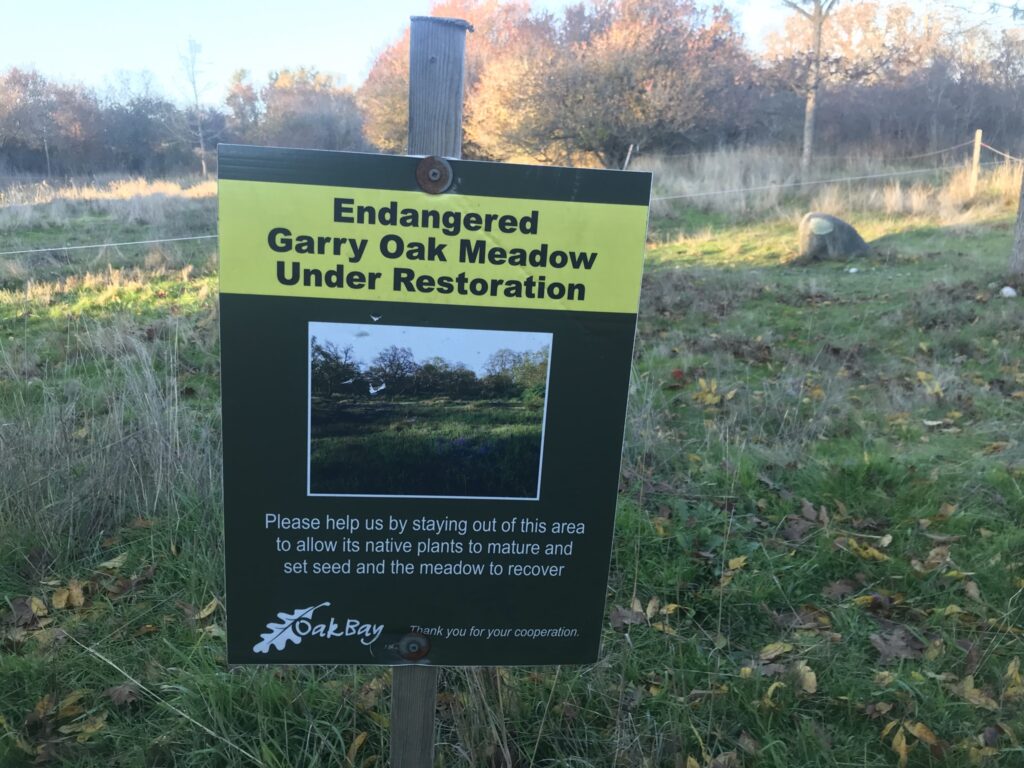
Learning about the traditional Indigenous nations in Victoria prompted me to consider a variety of other questions. The Lekwungen and WSANEC, like most Indigenous cultures, are traditionally rooted in the Land; the seasons, the plants, the animals not only are physically important, but also hold great spiritual significance and lessons. I however, feel very disconnected from the natural world around me; I know very little about Victoria’s biodiversity or natural history. I wish this wasn’t the case because I know that connection with the natural world spurs appreciation for it, and is valuable for one’s mental health as well as driving greater environmental actions.
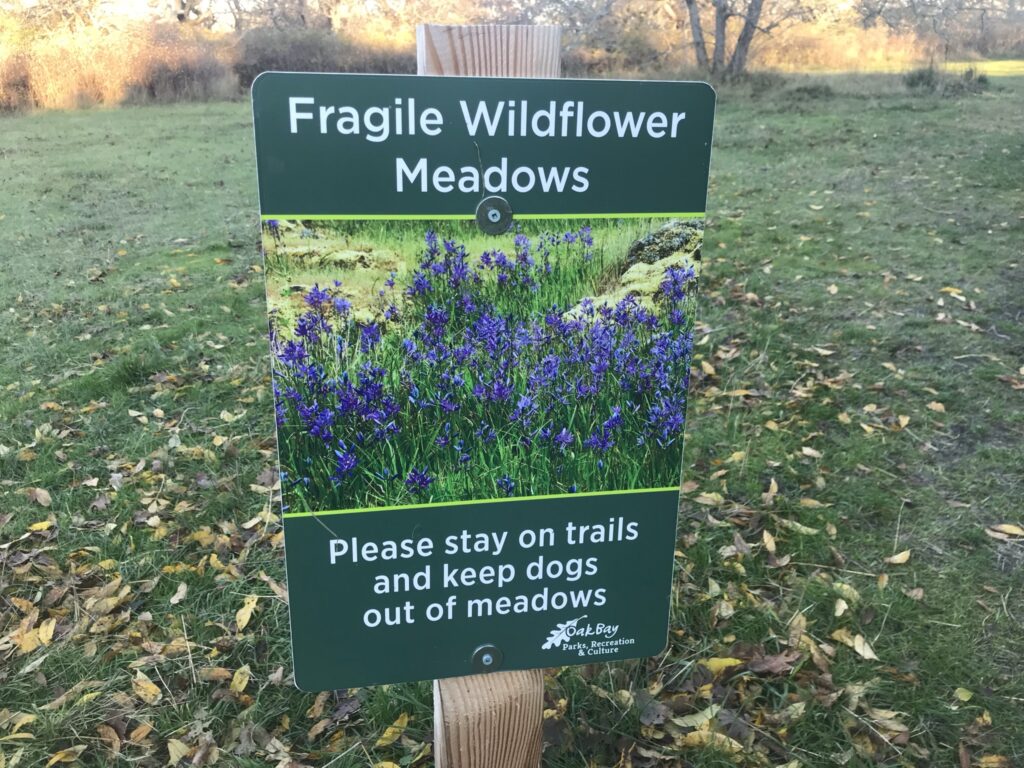
So I will now shift my attention to observing, learning, and reflecting on the natural world around me. Through my research, I’ve been learning more about the Garry Oak ecosystems. About 10,000 years ago temperatures began to climb, which melted the ice sheet covering British Columbia. Around 8,000 years ago Garry oak trees appeared and thrived before the temperatures once again began to drop (about 3,800 hundred years ago), limiting them their presence.
First Nations groups then used fire to replace the role of lightning, helping to clear meadows for camas and other plants. Fire allowed the oaks to take deeper soils, out competing the conifers. The burning of the plants under the oaks, they made hunting easier and allowed the land to produce more food. Once Europeans arrive, they halted the fires, grazed livestock and claimed land. Development and invasive species worsened the problems, and today natural Garry oak ecosystems are few and far between. This is bad news because Garry oak ecosystems are a “hot spot” for biological diversity; roughly 700 different plants grow in them, surpassing the diversity in every other terrestrial ecosystem in the region.
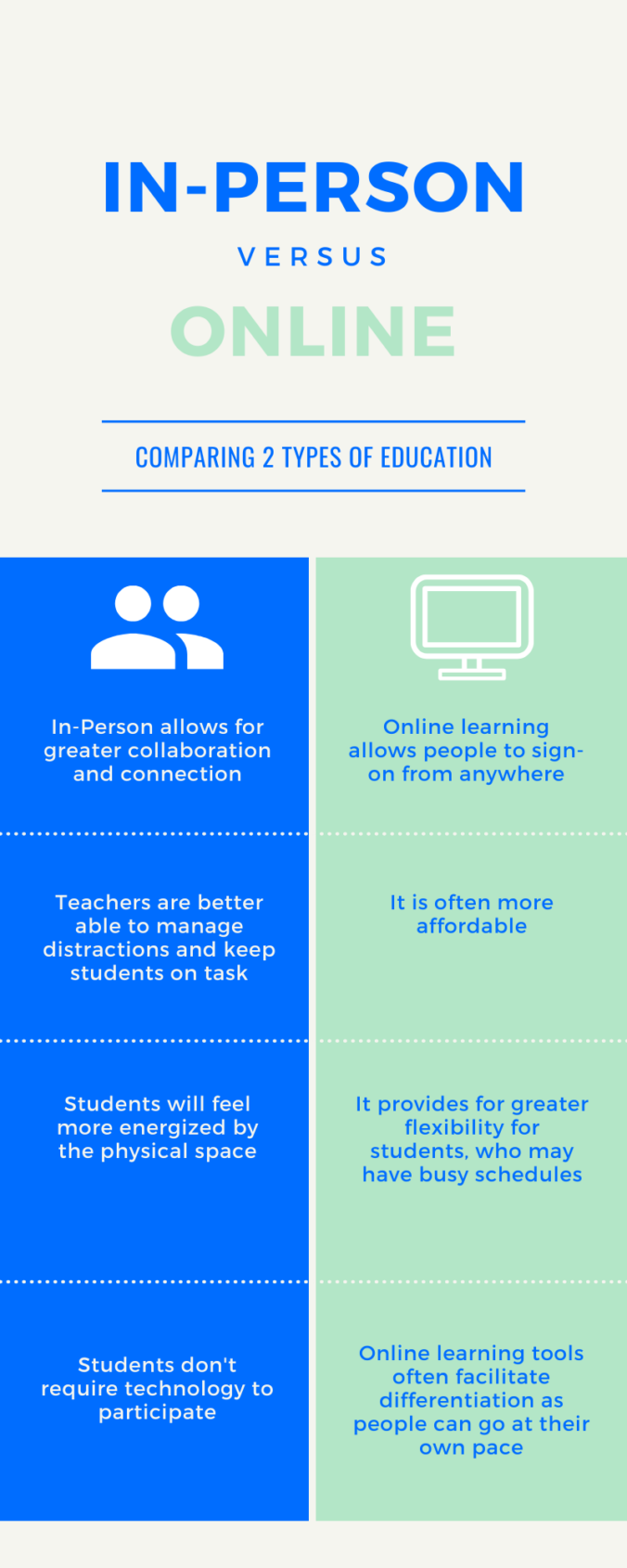
In class today we talked about distributed learning and some of the pros and cons of the online format. Rather than typing out another reflection, I thought I would give Canva a go for the first time and so created an Infographic based on some of the things we talked about! I was very impressed how easy it was to just plug into one of the many templates.